Used truck inspection checklist: what to verify before you buy
Start with vehicle identity and documents, then inspect the truck cold, underneath and under appropriate operating conditions. A photograph or a short engine video cannot establish roadworthiness. Use this checklist to organise the evidence and questions for a qualified inspector.
Firefly TruckPublished Updated
In this article
Start with the exact vehicle, not the model name
Before discussing payment, ask for the stock reference, chassis or vehicle identification number, year information, engine details and photographs of identification plates. Match those details across the quotation, inspection report and available ownership or export documents. A model name alone does not establish which vehicle will be supplied.
Ask the seller to distinguish confirmed specifications from estimates. Record whether mileage is supported by service records and instrument readings, and whether the truck has been rebuilt or had major components replaced. A repainted cabin or a clean engine bay is not evidence of mechanical condition.
Request a cold start and an uninterrupted walkaround
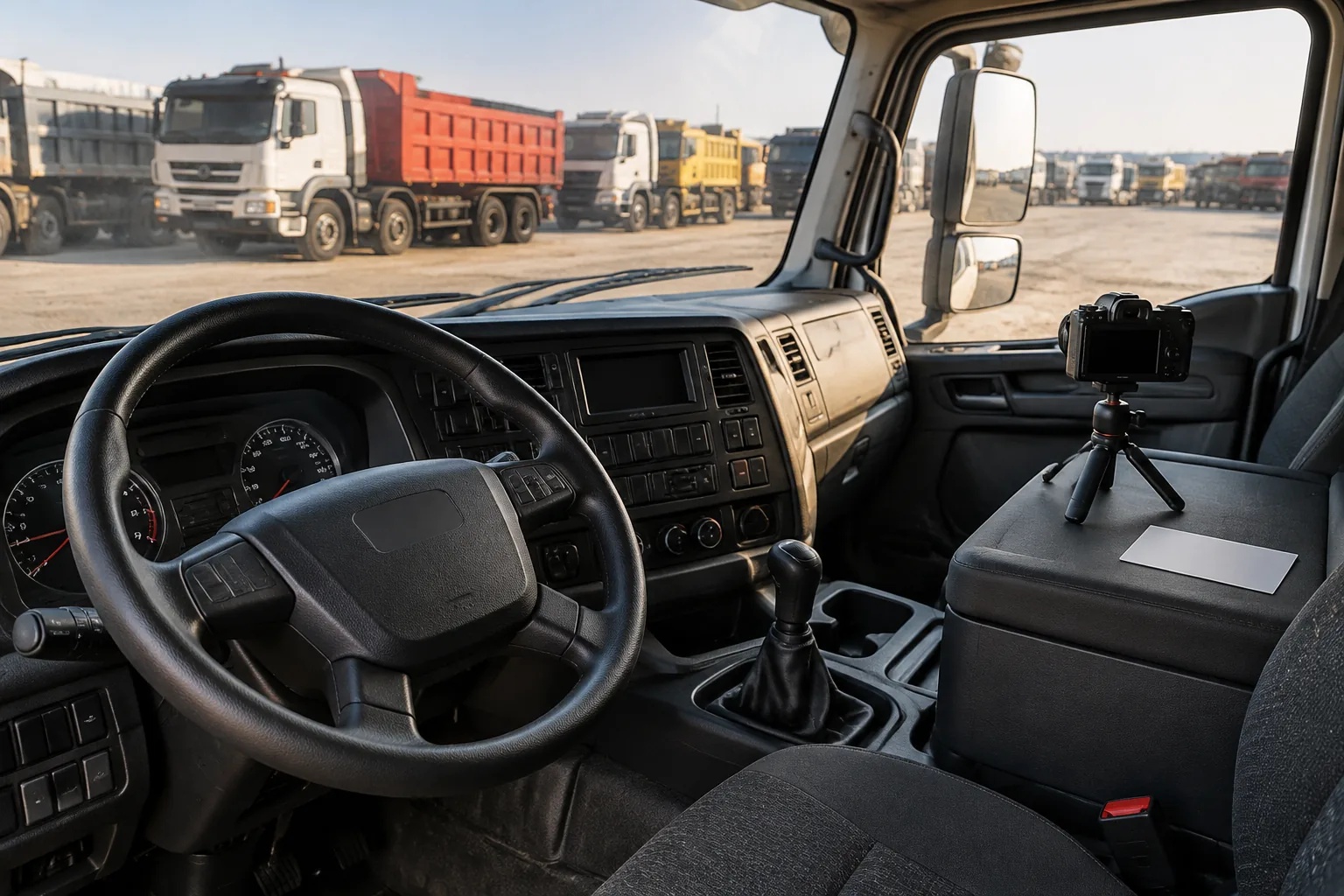
Arrange a live video or an independent inspection where possible. Ask whether the engine is genuinely cold before starting. An inspector can assess starting behaviour, warning lights, abnormal noises, visible leaks and exhaust behaviour in context. Video quality, weather and temperature affect what can be observed; do not diagnose engine condition from smoke colour alone.
Show the identification plate and the complete truck in the same inspection session.
Show the dashboard before starting, after starting and after the engine has run.
Record the engine bay, hoses, belts and accessible fluid areas without reaching into moving machinery.
Ask for dated evidence and retain the original files with the stock reference.
Request dashboard records before and after starting, together with a continuous walkaround video.
Check chassis, tyres, steering and braking evidence
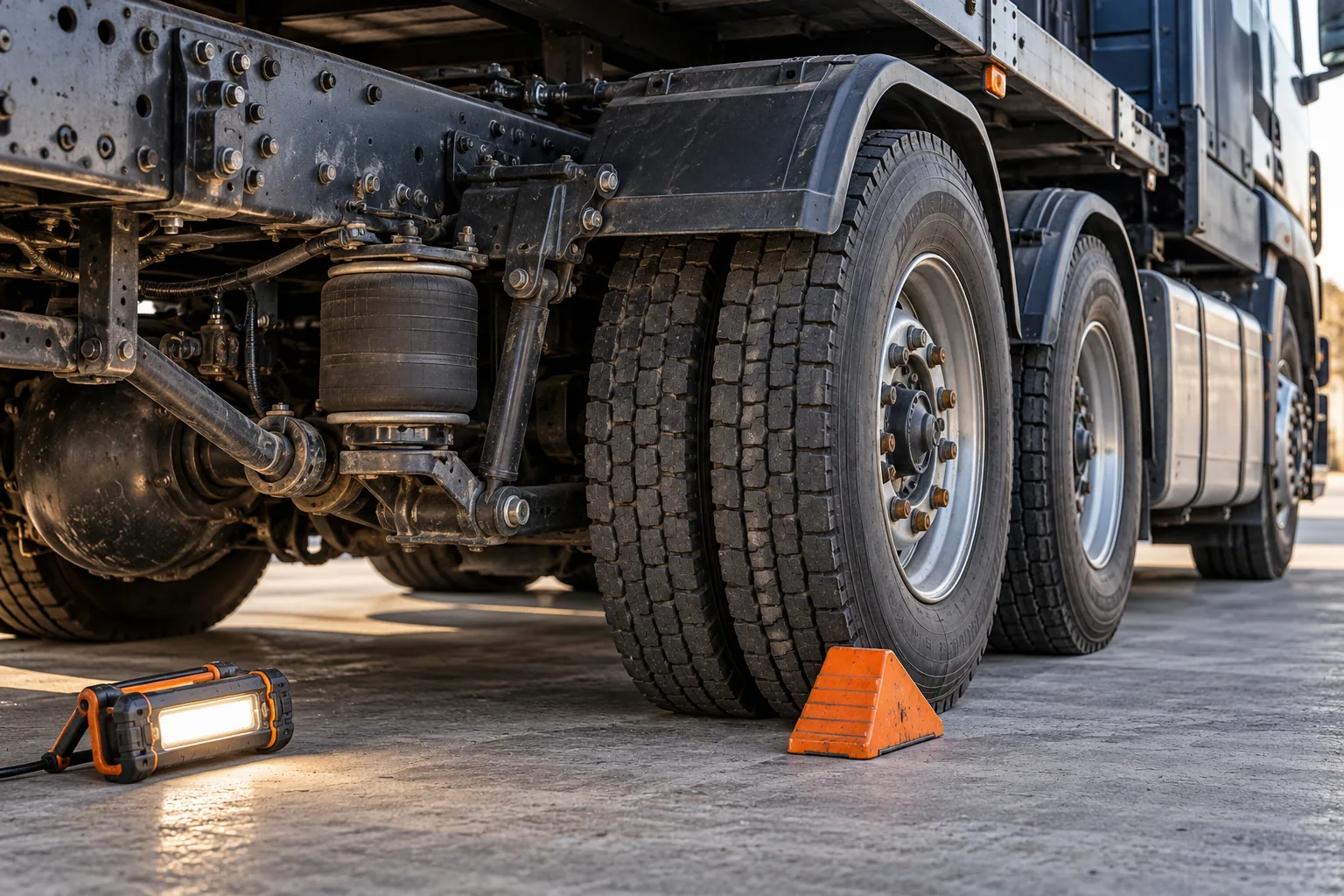
A competent inspector should assess the frame, mounting points, suspension, steering components, wheels and tyres. Look for documented repairs, corrosion, cracks, uneven tyre wear and mismatched components. Inspectors need suitable facilities to examine inaccessible areas safely; never work underneath an unsupported vehicle.
Brake and steering performance require more than a visual check. Ask what testing was performed, who performed it and whether results are available. Do not treat a public-road video as a substitute for a properly controlled test. Local roadworthiness and import requirements must be checked separately for the destination.
Inspect the equipment that will do the work
For a tractor unit, have the coupling equipment, air and electrical connections and compatibility with the intended trailer checked. For a tipper, examine the body, hinges, subframe, hydraulic equipment and controls. A tipping demonstration must follow the manufacturer's safety procedure on suitable ground with appropriate exclusion zones. Do not ask an untrained operator to improvise a load test.
Explain the intended cargo, payload, route and work environment to the inspector. A truck can appear mechanically sound and still be unsuitable for its intended job. Ratings on the vehicle and component plates must be considered alongside local legal limits.
Include the body, hinges and hydraulic equipment in the inspection scope. Any demonstration needs competent personnel and the manufacturer’s safety procedure.
Turn findings into written purchase conditions
Ask for a report that separates inspected items, defects, repairs recommended and areas that could not be assessed. Agree in writing which defects will be rectified, how repairs will be verified, what is included in the price and which documents accompany the vehicle. Reconfirm availability and vehicle identity before committing to payment.
This guide is a procurement checklist, not a technical inspection certificate or a promise that a particular truck is roadworthy. Use an appropriately qualified inspector and confirm destination requirements with competent local advisers.
Reference and next steps
The UK Driver and Vehicle Standards Agency provides an illustrated HGV walkaround check guide. It is a useful reference for visible checks, but it is UK operational guidance, not an overseas import approval or a complete pre-purchase inspection standard.