Ordering truck spare parts: how to confirm the right part before paying
The same truck model can use different engines, axles and electrical parts. A useful parts enquiry combines vehicle identity, the component actually fitted and written supplier confirmation. Use this checklist and enquiry template before paying or arranging an overseas shipment.
Firefly TruckPublished
In this article
Start with the vehicle and the component actually fitted
A model name and year are a starting point, not a fitment guarantee. Record the VIN or chassis number and photograph the identification plate. For an engine, gearbox or axle part, also record the relevant assembly model and serial number where available. A used truck may have a replacement assembly or modifications, so a VIN lookup alone may not describe what is fitted today.
Ask the workshop to record the symptom and diagnosis before ordering. A fault code naming a sensor does not prove that sensor has failed. Keep the old component until identification and repair acceptance are complete, where safe and permitted. Do not dismantle a safety-critical assembly just to obtain a photograph; use qualified personnel and the correct isolation and support procedure.
Send a small, readable evidence pack
Vehicle identity, assembly identity and any known replacement or modification.
A clear photograph of the complete old part, its position on the vehicle and every label or stamped number.
Close-ups of connectors, mounting points and ports; record handedness and position relative to the vehicle's direction of travel.
Measurements requested by the supplier, with units and a clear measuring reference; quantity required and whether ordering is per item or per kit.
Do not rely on colour, a similar catalogue image or an unreadable number. For example, two alternators may look alike but differ in voltage, mounting or connector arrangement. Record the installed unit's label and have the proposed replacement checked against the vehicle specification. A brake component also needs its exact system and application checked; appearance and dimensions alone do not establish safe compatibility.
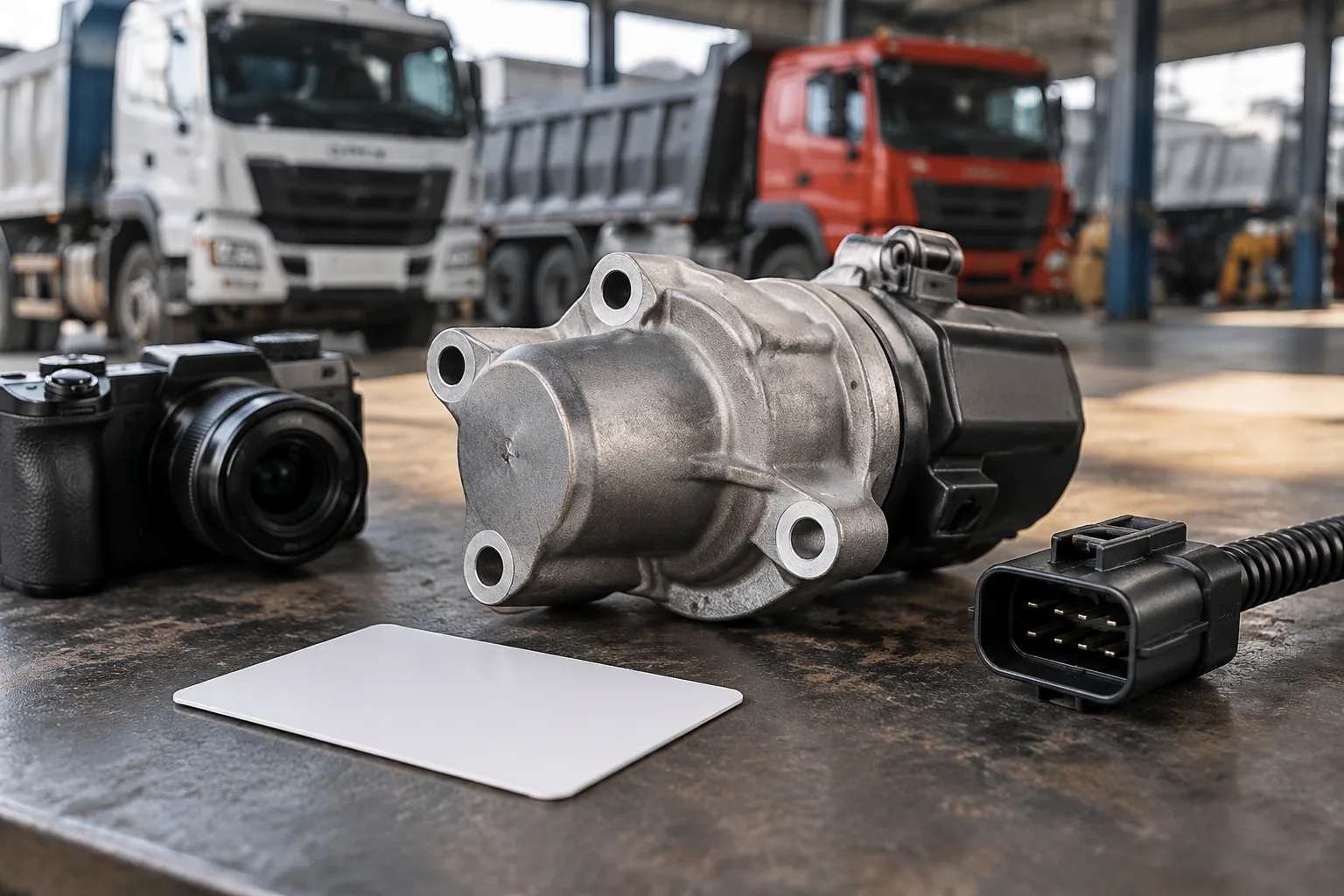
Send clear images of the fitted part, connector and mounting points with its identification. Similar appearance does not prove compatibility.
Get written confirmation when a number changes
Ask the supplier to state the quoted manufacturer and part number, the old number it replaces and the source of the cross-reference. A casting number on a housing is not necessarily the orderable service-part number. If a number has been superseded, ask whether the replacement needs a revised connector, bracket, mating component or complete kit. Do not accept an unexplained claim that it is universal.
Distinguish a vehicle-brand genuine part, an independently branded replacement, a remanufactured part and a used part. Ask who made it, its condition and what documentation is supplied; a package marked OEM is not sufficient evidence of origin or suitability. Electronic modules may require coding or calibration, and emissions-related parts must match the applicable configuration and local requirements. Have the workshop confirm these points before approving a substitute.
Compare complete quotations, not just unit prices
Request the exact reference, quantity, condition, included seals or hardware, exclusions, availability confirmation and dispatch estimate. Ask for photographs of the actual supplied item and labels before dispatch when practical. Identify whether the price includes packing, freight, insurance, duties and taxes, and who handles import clearance. Estimates are not guaranteed arrival dates.
For a remanufactured exchange unit, clarify any core deposit, return deadline, acceptance criteria and return freight. Agree in writing on the procedure if the part is incorrect, damaged or defective: evidence required, notification period, return authorisation, transport costs and any limits on labour reimbursement. Confirm the payee through a trusted contact channel, especially if bank details change.
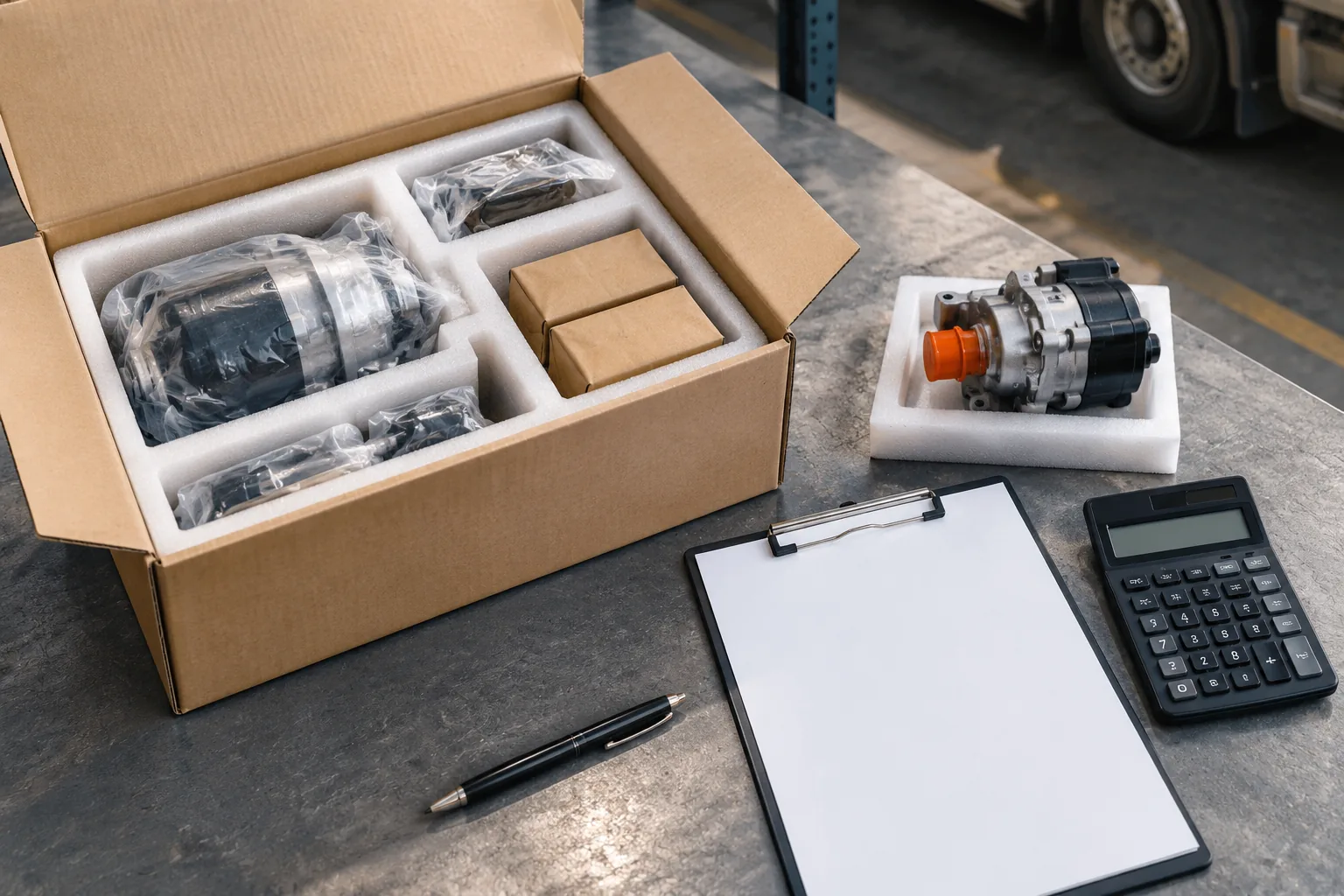
Compare the supplied scope, packaging, freight and claims terms in writing. A low unit price does not establish the complete cost.
Inspect on arrival before installing
Photograph the unopened package, shipping label and any damage. Compare the contents, quantities and part labels with the approved quotation. Have the workshop compare the replacement with the old component and the manufacturer information: mounting, connectors, seals and specification. Do not force a fit, modify a connector or remove identification labels to make a doubtful part work.
If something differs, stop and send the supplier photographs and references before installation or alteration. Retain packaging and shipping documents. Installation, torque settings, fluid specifications and any coding or calibration must follow the correct manufacturer procedure. Record the fitted part, date and distance or hours, then verify the original fault and associated systems under safe conditions before returning the truck to service.
Copy this parts-enquiry template
Vehicle model and VIN/chassis: [ ]. Assembly model/serial: [ ]. Symptom and workshop diagnosis: [ ]. Existing part number and photos: [ ]. Mounting, connector and requested measurements: [ ]. Position and quantity: [ ]. Destination: [ ]. Please confirm the exact supplied brand, reference and condition, compatibility basis and any supersession, included kit items, coding requirements, total charges, dispatch estimate and incorrect-part/return terms.